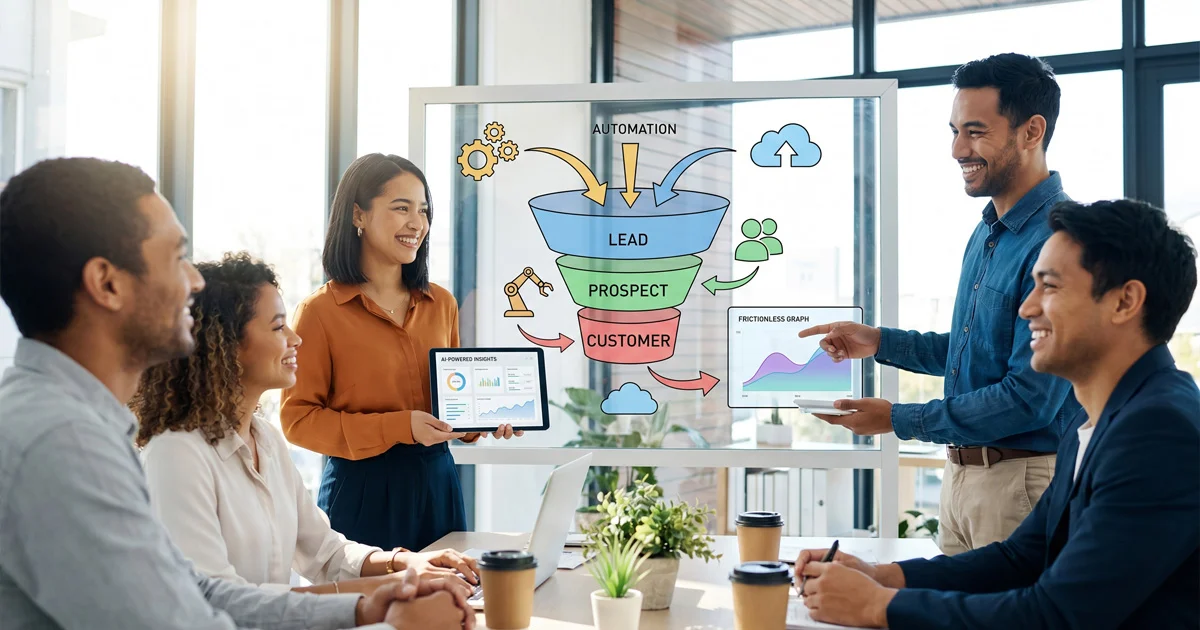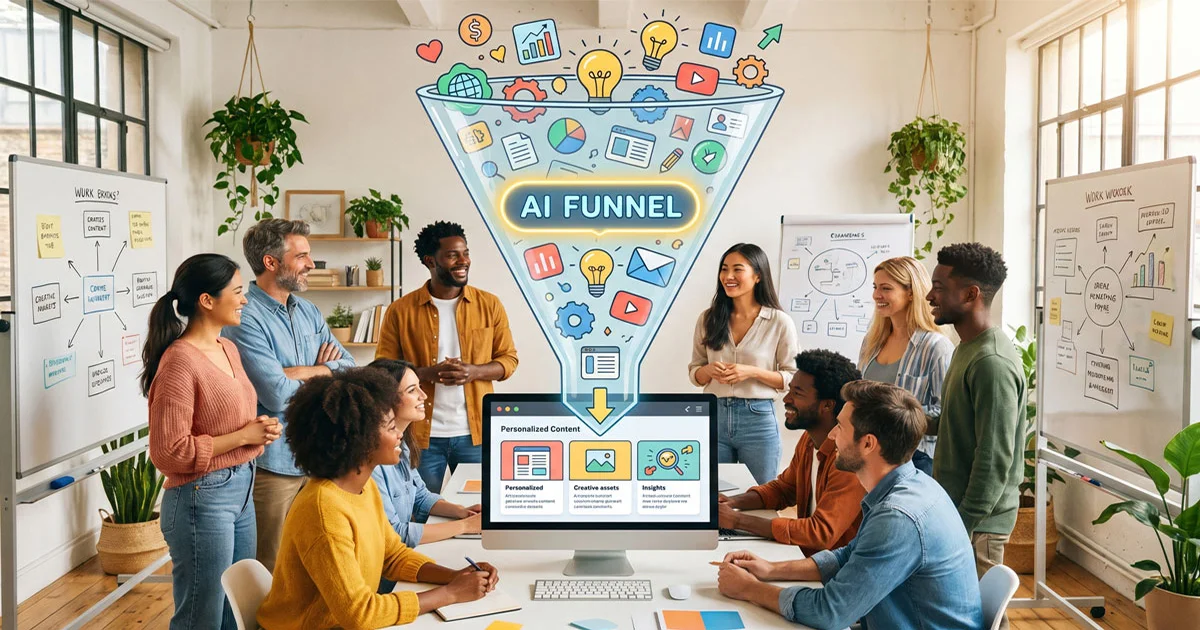
The Old Way of Getting Clients Is Broken
You run a business. You spend money on advertising, you post on social media, you ask for referrals. Someone finds you, they're interested, they reach out — and then what happens?
If you're like most small business owners, here's what actually happens. They call and get voicemail. They fill out a contact form and hear back two days later. They send a WhatsApp message at 9pm and get a reply the next morning. By that point, they've already booked with someone else.
It's not that you don't care. It's that you're busy running a business, and there are only so many hours in a day. The problem is that your leads don't wait. Research consistently shows that a prospect who doesn't hear back within five minutes of reaching out is 80% less likely to convert. Not 80% less interested — 80% less likely to convert. Speed of response has become as important as the quality of your service.
This is the problem an AI funnel solves. Completely.
TL;DR
- The Problem: Traditional funnels lose leads because human response times are too slow. Prospects expect instant replies.
- The Solution: An AI funnel uses intelligent, conversational automation to capture, qualify, and book leads 24/7.
- The Result: Higher conversion rates, lower acquisition costs, and a pipeline that works even while you sleep.
So, What Exactly Is an AI Funnel?
An AI funnel is an automated system that handles every stage of your lead journey — from the moment someone first hears about your business to the moment they become a paying client — without requiring you to be available, responsive, or even awake.
Unlike traditional marketing funnels, which are mostly just a sequence of emails or ads that push people toward a sale, an AI funnel is conversational and intelligent. It doesn't just broadcast messages at people. It listens, responds, qualifies, and adapts — in real time, across whatever channel the lead is using.
Think of it as having a brilliant, tireless member of your team whose only job is to handle every inbound lead, answer every question, and book every appointment — at 3am on a Sunday if that's when someone decides to reach out.
That's an AI funnel.
The Four Stages of an AI Funnel
Every effective AI funnel moves a prospect through four distinct stages. Understanding each one helps you see why it outperforms every other lead conversion method available to a small business today.
Stage 1: Attract — Reaching the Right People at the Right Moment
The funnel starts before a lead ever contacts you. AI-driven targeting tools can identify the people most likely to need your service based on their behaviour, location, search history, and demographics — and put your business in front of them at the exact moment they're looking.
This isn't spray-and-pray advertising. It's precision. A dental clinic can target people who searched for 'emergency dentist near me' in the last 48 hours. A trades business can target homeowners who recently searched for roof repairs after a storm. A fitness studio can target people who just moved to the neighbourhood.
The result: more qualified traffic, lower cost-per-lead, and leads who already have a reason to be interested before they ever see your ad.
Stage 2: Qualify — Sorting Signal from Noise
Not every enquiry is worth your time. Some people are just browsing. Some are competitors. Some want something you don't offer. A traditional funnel treats every lead the same — it just tries to convert everyone. An AI funnel is smarter.
When a lead makes contact — whether that's a call, a WhatsApp message, a website chat, or a form submission — the AI engages them immediately in a natural conversation. It asks the right questions, gently and naturally, to understand exactly where they are in their decision process.
Are they ready to buy this week? Are they comparing prices? Do they have a specific problem that fits what you offer? The AI figures this out without the lead ever feeling like they're being put through a script. The result is a qualified lead handed off to you — or booked directly into your calendar — without you spending a single minute on tyre-kickers.
Stage 3: Nurture — Building Trust Without Lifting a Finger
Most leads don't buy the first time they contact you. They need to trust you first. They need to see that you understand their problem. They need to feel like you're the obvious choice before they commit.
Traditional businesses do this manually — follow-up calls, email sequences, the occasional check-in. It's time-consuming, inconsistent, and almost always falls through the cracks when you get busy.
An AI funnel nurtures leads automatically. It sends personalised follow-up messages based on where the lead is in their journey. It shares relevant information — a case study, a testimonial, an answer to a question they asked — at the right time. It checks in without being pushy. And it does all of this across every channel simultaneously, so whether the lead prefers SMS, email, WhatsApp, or Instagram DMs, they hear from you consistently.
The lead feels looked after. You've done nothing.
Stage 4: Convert — Turning Interest Into Revenue
This is where everything comes together. The lead has been attracted, qualified, and nurtured. They're ready to take the next step. At this point, a traditional funnel usually requires a human — someone to answer a final question, take payment, or book an appointment.
An AI funnel handles this too. It books the appointment directly into your calendar. It answers final objections in real time. It takes deposit payments through an integrated payment link. It sends a confirmation, a reminder, and a pre-appointment information pack — all automatically.
By the time you speak to this client for the first time, they're already sold. You're not convincing them — you're just delivering.
How an AI Funnel Is Different from a Traditional Funnel
Traditional sales funnels are linear, passive, and slow. They push people through a fixed sequence of steps and hope enough of them make it to the end. They don't adapt to individual leads, they can't respond in real time, and they stop working the moment someone goes off-script.
An AI funnel is dynamic, responsive, and always on. Here's what that looks like in practice:
Response time. A traditional funnel responds when someone checks their inbox. An AI funnel responds in seconds, regardless of the time of day or how many leads are coming in simultaneously.
Personalisation. A traditional funnel sends the same emails to everyone. An AI funnel adjusts every message based on what the lead said, asked, or did. Someone who expressed concern about price gets a different message than someone who asked about turnaround time.
Multi-channel. A traditional funnel typically works on one or two channels — usually email and maybe retargeting ads. An AI funnel works across voice, SMS, WhatsApp, Instagram, Facebook Messenger, email, and website chat simultaneously — meeting leads wherever they are.
Scale. A traditional funnel breaks when lead volume spikes. An AI funnel handles ten leads or ten thousand leads with identical quality and speed.
Learning. A traditional funnel is static — you set it up once and it runs the same way forever. An AI funnel learns from conversations, identifies where leads drop off, and improves over time.
Real Examples of AI Funnels in Action
These aren't hypotheticals. Businesses across industries are already running AI funnels, and the results are consistently the same: more leads converted, less time spent, higher revenue with the same or smaller team.
A dental clinic in the US set up an AI funnel that captured every after-hours enquiry — calls, website chat, and Instagram messages — and booked appointments directly into the practice management system. In the first month, they recovered 31 consultations that would have been lost to voicemail. At an average consultation value of $300, that's $9,300 in one month from leads they were already getting but not capturing.
A real estate agent in Canada used an AI funnel to qualify inbound buyer enquiries before they ever got on the phone. The AI asked about budget, timeline, and property preferences, and only forwarded leads who were genuinely ready to move in the next 90 days. The agent's conversion rate on calls tripled because every call was now with a serious buyer, not a browser.
A fitness studio in the UK ran an AI funnel across Instagram and SMS that responded to every DM and text enquiry instantly, offered a free trial class, answered questions about class times and pricing, and booked the trial directly. Their cost per new member dropped by 40% because they stopped losing leads in the gap between 'interested' and 'booked'.
What Makes an AI Funnel Actually Work
Not all AI funnels are equal. The difference between one that generates real revenue and one that frustrates prospects and damages your reputation comes down to a few things.
Training. The AI needs to know your business deeply — your services, your pricing, your tone, your FAQs, your process, your team. A generic chatbot that can't answer specific questions is worse than no chatbot at all. A properly trained AI agent, built for your specific business, is indistinguishable from a knowledgeable human assistant.
Channel coverage. A funnel that only works on your website misses every lead who contacts you via WhatsApp, Instagram, or phone. The most effective AI funnels cover every channel your customers use — ideally all of them simultaneously.
Seamless handoff. The AI should know when to involve a human. Complex negotiations, sensitive complaints, and high-value decisions should escalate to you cleanly and quickly. The AI handles everything it can; you handle everything that genuinely needs you.
Consistent follow-up. Most leads don't convert on first contact. The AI funnel needs to follow up consistently — not aggressively, but persistently — over days or weeks, until the lead converts or explicitly opts out.
Getting Started with an AI Funnel
Building an AI funnel from scratch requires integrating several systems — a conversational AI platform, your CRM, your calendar, your payment processor, and your communication channels. For most small business owners, the technology alone is overwhelming, and that's before you've trained the AI on your specific business.
The businesses that see the fastest results don't build their AI funnels themselves. They work with a team that has already built hundreds of them — a team that knows which tools work for which industries, how to train the AI to sound like your business, and how to connect everything so it works reliably from day one.
A well-built AI funnel pays for itself quickly. If you're currently converting 20% of your inbound leads, a properly configured AI funnel that responds faster, follows up consistently, and never misses a message can realistically push that to 40% or higher. For most small businesses, that means doubling revenue from the leads you're already generating — without spending a single extra pound, dollar, or dollar on advertising.
The Bottom Line
An AI funnel isn't a luxury for enterprise businesses with big marketing budgets. It's a competitive necessity for any small business that wants to stop losing leads to slower-responding competitors.
Your competitors are already doing this. The question isn't whether AI funnels work — it's whether yours is set up before or after the businesses around you get there first.
If you want to understand exactly what an AI funnel would look like for your specific business — what it would cover, what it would cost, and what you could realistically expect in return — the fastest way to find out is to talk to someone who has built them before.